Stone Veneer Installation in Auburn, WA
Federal Way Stone Veneer helps you plan stone veneer installation in Auburn, WA, from exterior facades and porch columns to fireplace surrounds and interior accent walls. Natural thin stone and manufactured veneer offer different textures, shapes and joint treatments. Our focus is the project brief: what you want to face, which material suits that surface, and what the installer needs to include behind the visible finish.
A useful starting point is a sample panel and a photograph of the whole wall. The panel shows how the stone and mortar work together; the photograph shows where that finish must stop. For an Auburn siding remodel, choosing those boundaries early helps you compare a lower stone band, a full front elevation or a smaller entrance feature without treating them as interchangeable quantities of stone.
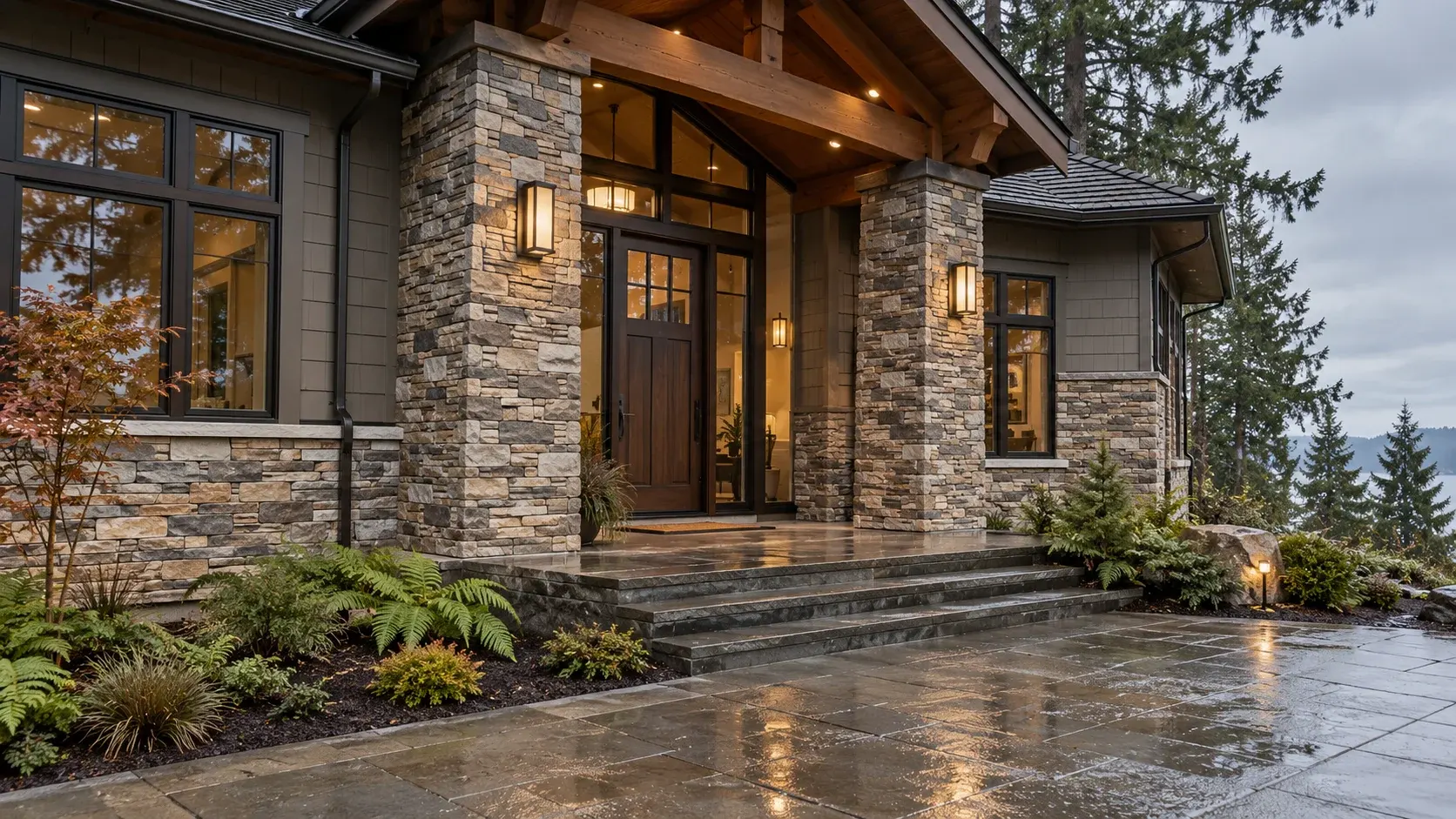
Stone veneer choices in Auburn
Facades, wainscoting and entry columns
A facade can change substantially without covering every wall. Stone around a garage opening frames a wide surface, while wainscoting adds a lower band beneath siding. Porch columns introduce more corners and exposed edges in a smaller area. Compare these layouts on the building before deciding how much material to buy. A stone profile that looks balanced across a broad wall may need a different arrangement around a narrow post.
Include the top of each stone band, the return at its ends and the junction beside windows in the proposed detail. If existing cladding will be removed, the quote should explain how the backing will be inspected before it is covered again. Our Exterior Stone Veneer Installation guide expands on these configurations. Veneer changes the finish; any required structural work needs its own assessment and scope.
Fireplace surrounds and interior accent walls
For a fireplace surround, first decide whether the change ends at the mantel or continues to the ceiling. That choice affects the amount of visible stone, the treatment of side returns and how the feature meets adjoining walls. Bring a sample close to the room's flooring and trim, and look at it under the lighting you actually use. A deeply textured stone casts stronger shadows than a flatter cut.
Keep the fireplace facing separate from the appliance, venting and firebox. Any required clearances must be checked against the actual fireplace system rather than guessed from a photograph. On an ordinary accent wall, identify outlets, switches, shelving and television mounts before setting the finished wall thickness. Planning those connections avoids leaving the installer to improvise around fixtures after the stone has been selected.
Outdoor feature walls and kitchen facing
An outdoor kitchen base or patio feature wall can use the same stone palette as the entrance without needing the same construction detail. A grill island has cabinet openings, vents and a countertop edge; a freestanding feature wall has an exposed top and ends. Those edges deserve as much attention as the face. Ask the installer to show how water is kept out of vulnerable junctions and how incidental moisture can drain from the selected assembly.
The veneer scope covers vertical facing on suitable bases and walls. It does not establish that an existing wall can retain soil, support a new counter or carry an appliance. Confirm the underlying construction separately. When comparing a whole outdoor project with a facing-only proposal, check which one includes removal, access protection and finishing around equipment already in place.
Commercial entrances and feature walls
For an Auburn storefront or office entrance, a sample should be viewed beside the doors, glazing and sign materials. Stone can mark the entrance or form a durable-looking lower facade, but the proposed thickness must work with door frames and other fittings. Ask for the finished boundary to be shown on a photograph or elevation so everyone prices the same area.
Inside, a reception feature wall has different coordination needs. Sign mounting, outlet locations and the wall's exposed ends may be more important than an exterior sill detail. If work is planned while the property remains occupied, include the sequence for keeping entrances usable and separating the work area from visitors. These are items to agree with the contractor; a materials selection alone does not settle access, scheduling or responsibility for adjacent trades.
Samples and siding-project planning in Auburn
Auburn's Community Development FAQ lists siding repair or replacement and building alterations among projects that may need permits. For a stone exterior remodel, describe the existing siding, the proposed veneer and any changes to the wall behind it. Ask the Permit Center how that complete scope should be submitted. A question about decorative stone becomes much easier to answer when staff can see whether the work includes removal, an altered opening or another building change.
Have the property address or parcel number ready. Auburn includes portions of both King and Pierce counties, so use the actual parcel information rather than assuming a county name resolves the project's jurisdiction. The city provides routes for looking up property details and discussing project questions.
Material selection can proceed alongside that scope discussion. Mutual Materials' Auburn branch lists stone veneer and thin natural stone veneer and describes product displays at the branch. Confirm the samples you want to see before visiting. Use the visit to compare corners and mortar treatments as well as color; it does not commit your installer to a particular supplier or establish that every displayed product suits your wall.
Compare complete stone veneer proposals
Natural stone, manufactured veneer and attachment
Natural thin stone is quarried material cut for use as a facing. Manufactured veneer uses cement-based units formed to reproduce stone textures. Neither label tells you everything about the finished appearance. Compare several pieces together, including the corner treatment and the proposed mortar color, rather than approving one attractive loose sample.
The attachment and backing belong in the same decision. An adhered veneer assembly needs a suitable prepared surface and compatible installation materials. For exterior work, the water-resistive barrier, flashing and transitions around doors and windows must be considered together. CMHA's guidance emphasizes this coordination for manufactured stone veneer. The stone face by itself is not a waterproof wall. Ask which details apply to the selected product and existing construction, and have those included in the proposal before comparing its price with another quote.
A useful estimate separates the stone finish from the preparation it depends on. Look for removal of existing material, assessment of the exposed wall, required repairs, the chosen stone and mortar, and treatment of corners and terminations. If concealed damage cannot be priced yet, agree how it will be documented and authorized when found.
Also identify where materials can be stored and how the installer will reach the wall. A small high feature can need more access equipment than a larger surface at ground level. Decide who coordinates permit questions and adjacent work, and request the selected product's care guidance at handover. These details make proposals comparable without relying on an unsupported price per square foot or a promised completion date.
If the property you are planning for is closer to the waterfront, Stone Veneer Installation in Des Moines explains that city's shoreline-review context alongside indoor and exterior options.
Frequently asked questions
Does every project in Auburn need the same approval?
No. An exterior siding alteration, an indoor accent wall and work that changes the underlying structure are different scopes. Auburn's FAQ specifically flags siding repair or replacement as work that may need a permit. Give the city the address and a clear description before assuming the same answer applies to every stone installation. Confirm any separate work involving a fireplace appliance with the appropriate specialist.
Can I keep the existing wall finish behind new veneer?
Possibly, but appearance alone cannot establish that the old surface is suitable. Coatings, attachment, wall condition and the selected veneer system all matter. Ask the installer to explain the proposed preparation and how the backing will support the finish. Covering a problem surface with stone does not correct the underlying defect, and the least disruptive option is not automatically the appropriate assembly.
What should I include in a stone veneer inquiry?
Include your Auburn address, photographs of the whole surface and its edges, and whether the work is indoors or outside. Add approximate dimensions if you have them, the existing finish and the look you want. For a fireplace, identify the appliance if known. Mention visible staining or loose material without assuming its cause, and confirm installer coverage before arranging a visit.
Plan your Auburn project
Prepare your stone veneer project details using the form below. Include the Auburn property location and the surfaces you want to change so the next discussion can focus on materials, preparation and the right installation scope. Phone coming soon.